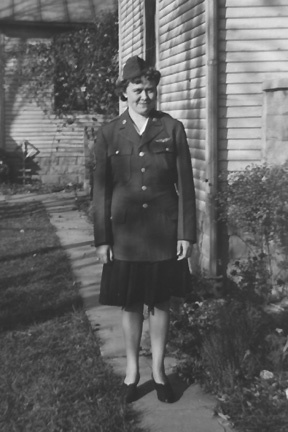
In which our Diva impersonates the Founding Mother of smarts and sass
A couple weeks ago, a friend alerted me to Drunk History's "Stumble Into History" contest, which called for videos of fans posing as historical figures to react to their portrayal on the show. It sounded like fun (and getting flown out to warm, sunny LA to do a walk-on in Season 3 sounds particularly good right about now!), but I've had other priorities, so it wasn't until this past weekend that I did anything about it.
At which point, I pulled it together in less than a day, with resources I had around the house, and uploaded my entry a comfortable three hours before deadline. I'm pretty pleased with myself for that. :-)
I spent a fair amount of time waffling among the awesome ladies on the list -- Mary Dyer? Dolley Madison? Nellie Bly? -- but ultimately Abigail Adams and her legendary letter-writing were always going to prevail. (I am rather sad nobody represented for Nellie, the original intrepid girl reporter.)
So, interspersing some of Mrs. Adams' famous words with a few of my own invention, I took pretend quill pen in hand and threw my mob cap in the ring.
You can check out the results here and (if you feel so inclined and if you have a Facebook account, on which the voting mechanism unfortunately depends) vote for me once a day until next Monday, March 2. Comments and sharing are also most definitely welcome, and thank you!!
Showing posts with label historical geekery. Show all posts
Tuesday, February 24, 2015
Wednesday, February 11, 2015
Grieve not with thy bitter tears
In which our Diva commemorates a famous death
On this day in 1862, Elizabeth Eleanor Siddal died of a laudanum overdose. The inquest ruled it accidental; some who knew her claimed to know for a fact that she had taken her own life. We will never be able to confirm with absolute certainty what was in her mind that night.
We do have her poems, many of which dwell on death and loss, a tendency in which she was not alone among her contemporaries.
On this solemn anniversary, this one -- probably my favorite of hers -- seems fitting. It closes Unvarnished; I recorded this reading a few years ago.
Early Death
Elizabeth Eleanor Siddal
Oh grieve not with thy bitter tears
The life that passes fast;
The gates of heaven will open wide
And take me in at last.
Then sit down meekly at my side
And watch my young life flee;
Then solemn peace of holy death
Come quickly unto thee.
But true love, seek me in the throng
Of spirits floating past,
And I will take thee by the hands
And know thee mine at last.
On this day in 1862, Elizabeth Eleanor Siddal died of a laudanum overdose. The inquest ruled it accidental; some who knew her claimed to know for a fact that she had taken her own life. We will never be able to confirm with absolute certainty what was in her mind that night.
We do have her poems, many of which dwell on death and loss, a tendency in which she was not alone among her contemporaries.
On this solemn anniversary, this one -- probably my favorite of hers -- seems fitting. It closes Unvarnished; I recorded this reading a few years ago.
Early Death
Elizabeth Eleanor Siddal
Oh grieve not with thy bitter tears
The life that passes fast;
The gates of heaven will open wide
And take me in at last.
Then sit down meekly at my side
And watch my young life flee;
Then solemn peace of holy death
Come quickly unto thee.
But true love, seek me in the throng
Of spirits floating past,
And I will take thee by the hands
And know thee mine at last.
Friday, January 9, 2015
Unvarnished vlog: Why Lizzie?
In which our Diva gets some use out of that phone tripod she got for Christmas
I've been bitten by the vlogging bug. (Well, technically I can call myself an early adopter -- all of these predate my even hearing the term "vlog" -- but it's way easier now.)
For those of you who prefer the written word, don't worry -- I still plan to do proper blog posts too! But thoughts come out differently in writing than they do in speaking, and of course once the Unvarnished process is more visibly underway, this way of sharing it should be even more fun.
I started simple today, with a few thoughts on why I'm so fascinated by Elizabeth Siddal and what inspired me to create a solo theatre piece about her. If you've been reading this blog for a while, you've probably encountered most of these thoughts in one form or another, but I wouldn't mind your giving a listen even so. And, if you're so inclined, sharing with potentially interested friends? :-)
I've been bitten by the vlogging bug. (Well, technically I can call myself an early adopter -- all of these predate my even hearing the term "vlog" -- but it's way easier now.)
For those of you who prefer the written word, don't worry -- I still plan to do proper blog posts too! But thoughts come out differently in writing than they do in speaking, and of course once the Unvarnished process is more visibly underway, this way of sharing it should be even more fun.
I started simple today, with a few thoughts on why I'm so fascinated by Elizabeth Siddal and what inspired me to create a solo theatre piece about her. If you've been reading this blog for a while, you've probably encountered most of these thoughts in one form or another, but I wouldn't mind your giving a listen even so. And, if you're so inclined, sharing with potentially interested friends? :-)
Wednesday, October 29, 2014
The spark of life
In which our Diva plays dramaturg as Victor plays God
Just got home from an encore screening of the National Theatre's amazing Frankenstein, which I was lucky enough to see on my UK trip in 2011. Still one of the most satisfying experiences I've ever had in the audience of any theatre, and it was lovely to revisit that experience as well as see it in new ways courtesy of the expert filming.
Once there, I kicked myself for missing the opportunity to give out postcards for the entirely different Frankenstein in which I'm currently performing, which has been equally amazing in its own way, even if we can't afford several thousand light bulbs and a turntable/elevator. I did give the website info to some lovely geeky ladies sitting nearby; I do hope they come check us out!
It's been particularly gratifying to log my first actual credit as dramaturg, after years of diving down the research rabbit hole at the slightest provocation. And then there was the delight of watching Cory Sandrock's fantastic brand-new script evolve through two developmental readings, one of which afforded me the privilege of reading the delightfully developed role of Elizabeth. I have smaller roles in the full production, but they're still lots of fun, and I had a great time creating the lobby display too.
With a steampunk slant and some truly stunning performances, you really don't want to miss this one. If you come out Halloween night (with a delayed 9 pm start to let all the little ghouls and goblins get home and start in on the sugar coma), there's $5 off if you come in costume.
Hope to see you there!
Frankenstein runs through November 9. Visit the GreenMan Theatre website for more information.
Just got home from an encore screening of the National Theatre's amazing Frankenstein, which I was lucky enough to see on my UK trip in 2011. Still one of the most satisfying experiences I've ever had in the audience of any theatre, and it was lovely to revisit that experience as well as see it in new ways courtesy of the expert filming.
Once there, I kicked myself for missing the opportunity to give out postcards for the entirely different Frankenstein in which I'm currently performing, which has been equally amazing in its own way, even if we can't afford several thousand light bulbs and a turntable/elevator. I did give the website info to some lovely geeky ladies sitting nearby; I do hope they come check us out!
It's been particularly gratifying to log my first actual credit as dramaturg, after years of diving down the research rabbit hole at the slightest provocation. And then there was the delight of watching Cory Sandrock's fantastic brand-new script evolve through two developmental readings, one of which afforded me the privilege of reading the delightfully developed role of Elizabeth. I have smaller roles in the full production, but they're still lots of fun, and I had a great time creating the lobby display too.
With a steampunk slant and some truly stunning performances, you really don't want to miss this one. If you come out Halloween night (with a delayed 9 pm start to let all the little ghouls and goblins get home and start in on the sugar coma), there's $5 off if you come in costume.
Hope to see you there!
Frankenstein runs through November 9. Visit the GreenMan Theatre website for more information.
Wednesday, September 24, 2014
Mermaid-like awhile they bore her up
In which our Diva's much-delayed dream project draws ever closer to reality
It's been over a month since I scrawled the words "END OF PLAY" in a spiral notebook, and just over a week since I typed the same ones into Celtx. Over a decade since the idea first hatched in my little brain, Unvarnished: A Portrait of Elizabeth Siddal is finally becoming an actual coming-to-a-stage-near-you solo theatre piece.
It even has a Facebook page, for which the wonderful Pre-Raphaelite social mediasphere has already garnered 161 Likes. I'm in contact with a venue for the first public reading, which will likely be in November or December in Elgin, and mulling various logistical considerations for touring the fully realized production.
With all that going on, of course I picked today to have a eureka moment about Ophelia's dress.
That's not entirely out of left field. In my text, the dress is the springboard for a little flight of fancy while Lizzie poses in the infamous tub, and it's always been important to my mental image of the show. But the details craved by my obsessive little costumer's brain (which couldn't help being a bit disappointed by the sad greyish thing the mostly gobsmackingly gorgeous Desperate Romantics put on Amy Manson; the designer for Emma West's Ophelia short film seems to have given it a little more thought, albeit on a restricted budget), are tantalizingly thin on the ground. Millais himself recorded in a letter that "To-day I have purchased a really splendid lady's ancient dress - all flowered over in silver embroidery - and I am going to paint it for 'Ophelia'. You may imagine it is something rather good when I tell you it cost me, old and dirty as it is, four pounds." (The Tate Britain educational info on the painting estimates that this would be about £250 today.)
Now, it didn't take too long to decide that a 20-something guy's idea of an "ancient dress" -- even if that 20-something guy is a genius painter intent on getting his masterpiece absolutely right -- is likely to be defined fairly broadly. In all likelihood, we're talking about something kept in a trunk for a generation or two before it found its way to the secondhand shop where Millais found it.
Which somewhat remarkably gives us more to go on than the painting itself, in which the distortion of the water makes it nigh impossible to discern much about the actual shape of the garment. That said, the shape does appear to be relatively simple, which lends further weight to the likelihood that it dated to the first couple decades of the 19th century.
The advent of machine-made net at the close of the 18th century paved the way for the early-19th-century fashion for gowns of muslin overlaid with embroidered net, often in gold or silver thread. So I've been working for a long time under the assumption that the Ophelia dress fell into that category, as typified by this gorgeous specimen at the V&A.
However.
The place I've always been tripped up is the neckline, which is clearly a couple inches higher than is typically found on this type of dress, appearing to cover Lizzie's collarbones. It's one of the few structural details we actually can see in the painting...
...or so I've always thought.
That eureka moment I mentioned? Follow the red dotted line:
It's been over a month since I scrawled the words "END OF PLAY" in a spiral notebook, and just over a week since I typed the same ones into Celtx. Over a decade since the idea first hatched in my little brain, Unvarnished: A Portrait of Elizabeth Siddal is finally becoming an actual coming-to-a-stage-near-you solo theatre piece.
It even has a Facebook page, for which the wonderful Pre-Raphaelite social mediasphere has already garnered 161 Likes. I'm in contact with a venue for the first public reading, which will likely be in November or December in Elgin, and mulling various logistical considerations for touring the fully realized production.
With all that going on, of course I picked today to have a eureka moment about Ophelia's dress.
That's not entirely out of left field. In my text, the dress is the springboard for a little flight of fancy while Lizzie poses in the infamous tub, and it's always been important to my mental image of the show. But the details craved by my obsessive little costumer's brain (which couldn't help being a bit disappointed by the sad greyish thing the mostly gobsmackingly gorgeous Desperate Romantics put on Amy Manson; the designer for Emma West's Ophelia short film seems to have given it a little more thought, albeit on a restricted budget), are tantalizingly thin on the ground. Millais himself recorded in a letter that "To-day I have purchased a really splendid lady's ancient dress - all flowered over in silver embroidery - and I am going to paint it for 'Ophelia'. You may imagine it is something rather good when I tell you it cost me, old and dirty as it is, four pounds." (The Tate Britain educational info on the painting estimates that this would be about £250 today.)
Now, it didn't take too long to decide that a 20-something guy's idea of an "ancient dress" -- even if that 20-something guy is a genius painter intent on getting his masterpiece absolutely right -- is likely to be defined fairly broadly. In all likelihood, we're talking about something kept in a trunk for a generation or two before it found its way to the secondhand shop where Millais found it.
Which somewhat remarkably gives us more to go on than the painting itself, in which the distortion of the water makes it nigh impossible to discern much about the actual shape of the garment. That said, the shape does appear to be relatively simple, which lends further weight to the likelihood that it dated to the first couple decades of the 19th century.
The advent of machine-made net at the close of the 18th century paved the way for the early-19th-century fashion for gowns of muslin overlaid with embroidered net, often in gold or silver thread. So I've been working for a long time under the assumption that the Ophelia dress fell into that category, as typified by this gorgeous specimen at the V&A.
However.
The place I've always been tripped up is the neckline, which is clearly a couple inches higher than is typically found on this type of dress, appearing to cover Lizzie's collarbones. It's one of the few structural details we actually can see in the painting...
...or so I've always thought.
That eureka moment I mentioned? Follow the red dotted line:
Yup. Right there in front of me the whole time: the actual neckline of the dress, outlined in reflective bluish highlights.
At first I thought maybe he painted the actual neckline, then altered it to look more medieval and/or better represent Ophelia's virginal innocence for his contemporary audience. But the more I look at it, the more I wonder what that lace flounce around the top of the V&A dress would look like if it were flipped up and clinging to its sopping wet wearer. I suspect it'd look a lot like this.
So, that's that direction settled on. Too bad I hemmed and hawed just a little too long about that perfect vintage sari on eBay; I probably could even have used the choli for the bodice! Ah, well. I'll just have to look around some more. Darn. Shopping. ;-)
Labels:
costume design,
historical geekery,
lizzie,
unvarnished
Friday, February 7, 2014
Nesting instinct
In which our Diva has been putting her winter restlessness to work
As you may have noticed, or at least heard (and heard, and heard, and heard -- the meteorologist on the local news sounds very tired of having to say this stuff!) it's been an awful lot of cold and snowy lately. Now, yours truly -- despite being made entirely of northern European barbarian DNA and having moved to Chicagoland on purpose -- is not a fan of this winter business. Not one little bit. Well, maybe a little bit. A couple weeks of pretty fluffy snow viewed from the nice warm indoors would be fine.
But what's going on this year is more than a little wearing, and I've been combating it by tackling some long-overdue rearranging and organizing and decorating. My house dates to 1908, an American Foursquare that the former owner (a contractor and carpenter himself) updated in all the right ways, keeping intact its beautiful Craftsman woodwork, including the dining room built-in with its original leaded glass. I fell in love with it the moment I walked in the door just over nine years ago, and promptly dove into research, dreaming of how to bring out its historic character before even making an appointment with a home inspector.
Other pursuits always seem to take precedence, of course, and for the most part those dreams go unrealized. But in the last couple weeks, I've mostly finished overhauling the spare bedroom, a process that started several months ago with expanding the existing shelving to accommodate the lifelong collection known as Val's Personal Doll Army.
Along the way, I've done a lot of thrift shopping, a little painting of shelves thus acquired, some rejiggering of the closet configuration, and spent basically a whole day sitting on the floor devising a new filng system for sheet music that wll actually keep it neat this time, darnit! (That last resolution will be helped by the sad fact that Elgin Opera is no more, which means I'm not tossing another concert's worth of pages on the "I'll put that away later, really I will" pile every few months.)
Probably my favorite design inspiration is one that didn't cost a dime: A pair of vintage blue suitcases that belonged to my grandparents brought up from the basement and stacked into an instant nightstand that perfectly suits the height of the bed and the color scheme and quirky cottage feel of the room.
With only a few small details left there, I've turned my attention to the bigger challenge of organizing the basement, which includes my sewing room and new (and for the moment somewhat makeshift) recording studio for audiobooks. It's not as creative and fun as taking a room and making it pretty and welcoming, but it's the logical next step (at least in the way the house and the stuff in it all goes together in my head) necessary before making the rest of the rooms as pretty and welcoming as they deserve to be.
It'll be a while, for instance, before I can even consider anything involving paint in any way, let alone anything on the order of what latter-day Pre-Raphaelite muse, artist, and blogger Grace has created in her Catty-Corner Cottage. (Hubby and I have been saying from the beginning that this house deserves a name, but we've yet to come up with one. Maybe that'll finally arrive this year too!) Especially the Twelve Dancing Princesses (one of my favorite fairy tales too!) in procession around her dining room walls.
On both that blog and her wider-focused one Domythic Bliss, one of the things I love is how much of it involves making your home fairy-tale beautiful with everyday resources. The trade-off for not spending a lot of money is time, of course, but for many of us that's part of the fun.
When William Morris designed Red House, both money and time were involved, not to mention the talents of Morris' illustrious circle of artistic friends. Recent conservation work has uncovered ever more of the extensive decorative painting throughout the house, including some figures thought to have been painted by Elizabeth Siddal.
I'm not far from that phase of Lizzie's life in writing Unvarnished, and am just realizing how I've set up for it in some sections that talk about their paintings as a world of their own creation. Red House was a truly an entire little world of Morris' own creation, realized with the collaboration of his wife Jane and their friends. (A Twitter conversation last week with Dinah Roe reminded me that there's a great deal that needs to be said about Jane's artistry with an embroidery needle and how it gets largely ignored, but that's a tangent for another day.) What an amazing way to fill hours and walls! Sounds like a party to me.
Funny thing -- when I was fifteen, and all this Pre-Raphaelite and Arts and Crafts obsession was still several years in the future, I got it into my head that I wanted to paint a full-wall mural in my bedroom. By that time we lived in a house we owned, after most of my Air Force brat childhood spent living on base, so it was technically not out of the realm of possibility.
Of course, no sane parent is going to turn a fifteen-year-old loose on an innocent expanse of white interior latex, but someone (I don't remember whose idea it was now) came up with the brilliant compromise of tacking up an old white sheet with plastic sheeting behind it. I spent a good chunk of my summer filling it with a rainbow, pot of gold, and flowers, and loved every minute. Once it was finished, I could wake up every morning, put on my glasses, and look at the big window onto a world I had made with my own hands and imagination. Kitschy and derivative imagination, sure, but all mine.
It was an amazing feeling. Making something special always is. I'm hoping to have that feeling a lot more by the time I've finished realizing the dreams for my grownup Arts and Crafts haven.
Speaking of making special things, here's a footnote more related to the previous post: Last week, on a Wombat Friday whim, I put together a "Wombat's Lair" Etsy treasury for the enjoyment of the Earnest Damsels Collective and other wombatophiles. One of the featured crafters, Isobel Morrell of Coldham Cuddlies, messaged me a lovely thank-you for the inclusion, and shared her coinage of the phrase "a wonderment of wombats," (as well as some nifty insights into her crafting process) having decided that the standard group noun, a mob, just wouldn't do for the purposes of her adorable plush creations. I have to agree, and have resolved to refer to our Wombat Friday assemblage as a "wonderment" forever more.
As you may have noticed, or at least heard (and heard, and heard, and heard -- the meteorologist on the local news sounds very tired of having to say this stuff!) it's been an awful lot of cold and snowy lately. Now, yours truly -- despite being made entirely of northern European barbarian DNA and having moved to Chicagoland on purpose -- is not a fan of this winter business. Not one little bit. Well, maybe a little bit. A couple weeks of pretty fluffy snow viewed from the nice warm indoors would be fine.
But what's going on this year is more than a little wearing, and I've been combating it by tackling some long-overdue rearranging and organizing and decorating. My house dates to 1908, an American Foursquare that the former owner (a contractor and carpenter himself) updated in all the right ways, keeping intact its beautiful Craftsman woodwork, including the dining room built-in with its original leaded glass. I fell in love with it the moment I walked in the door just over nine years ago, and promptly dove into research, dreaming of how to bring out its historic character before even making an appointment with a home inspector.
Other pursuits always seem to take precedence, of course, and for the most part those dreams go unrealized. But in the last couple weeks, I've mostly finished overhauling the spare bedroom, a process that started several months ago with expanding the existing shelving to accommodate the lifelong collection known as Val's Personal Doll Army.
Along the way, I've done a lot of thrift shopping, a little painting of shelves thus acquired, some rejiggering of the closet configuration, and spent basically a whole day sitting on the floor devising a new filng system for sheet music that wll actually keep it neat this time, darnit! (That last resolution will be helped by the sad fact that Elgin Opera is no more, which means I'm not tossing another concert's worth of pages on the "I'll put that away later, really I will" pile every few months.)
Probably my favorite design inspiration is one that didn't cost a dime: A pair of vintage blue suitcases that belonged to my grandparents brought up from the basement and stacked into an instant nightstand that perfectly suits the height of the bed and the color scheme and quirky cottage feel of the room.
With only a few small details left there, I've turned my attention to the bigger challenge of organizing the basement, which includes my sewing room and new (and for the moment somewhat makeshift) recording studio for audiobooks. It's not as creative and fun as taking a room and making it pretty and welcoming, but it's the logical next step (at least in the way the house and the stuff in it all goes together in my head) necessary before making the rest of the rooms as pretty and welcoming as they deserve to be.
It'll be a while, for instance, before I can even consider anything involving paint in any way, let alone anything on the order of what latter-day Pre-Raphaelite muse, artist, and blogger Grace has created in her Catty-Corner Cottage. (Hubby and I have been saying from the beginning that this house deserves a name, but we've yet to come up with one. Maybe that'll finally arrive this year too!) Especially the Twelve Dancing Princesses (one of my favorite fairy tales too!) in procession around her dining room walls.
On both that blog and her wider-focused one Domythic Bliss, one of the things I love is how much of it involves making your home fairy-tale beautiful with everyday resources. The trade-off for not spending a lot of money is time, of course, but for many of us that's part of the fun.
When William Morris designed Red House, both money and time were involved, not to mention the talents of Morris' illustrious circle of artistic friends. Recent conservation work has uncovered ever more of the extensive decorative painting throughout the house, including some figures thought to have been painted by Elizabeth Siddal.
I'm not far from that phase of Lizzie's life in writing Unvarnished, and am just realizing how I've set up for it in some sections that talk about their paintings as a world of their own creation. Red House was a truly an entire little world of Morris' own creation, realized with the collaboration of his wife Jane and their friends. (A Twitter conversation last week with Dinah Roe reminded me that there's a great deal that needs to be said about Jane's artistry with an embroidery needle and how it gets largely ignored, but that's a tangent for another day.) What an amazing way to fill hours and walls! Sounds like a party to me.
Funny thing -- when I was fifteen, and all this Pre-Raphaelite and Arts and Crafts obsession was still several years in the future, I got it into my head that I wanted to paint a full-wall mural in my bedroom. By that time we lived in a house we owned, after most of my Air Force brat childhood spent living on base, so it was technically not out of the realm of possibility.
Of course, no sane parent is going to turn a fifteen-year-old loose on an innocent expanse of white interior latex, but someone (I don't remember whose idea it was now) came up with the brilliant compromise of tacking up an old white sheet with plastic sheeting behind it. I spent a good chunk of my summer filling it with a rainbow, pot of gold, and flowers, and loved every minute. Once it was finished, I could wake up every morning, put on my glasses, and look at the big window onto a world I had made with my own hands and imagination. Kitschy and derivative imagination, sure, but all mine.
It was an amazing feeling. Making something special always is. I'm hoping to have that feeling a lot more by the time I've finished realizing the dreams for my grownup Arts and Crafts haven.
Speaking of making special things, here's a footnote more related to the previous post: Last week, on a Wombat Friday whim, I put together a "Wombat's Lair" Etsy treasury for the enjoyment of the Earnest Damsels Collective and other wombatophiles. One of the featured crafters, Isobel Morrell of Coldham Cuddlies, messaged me a lovely thank-you for the inclusion, and shared her coinage of the phrase "a wonderment of wombats," (as well as some nifty insights into her crafting process) having decided that the standard group noun, a mob, just wouldn't do for the purposes of her adorable plush creations. I have to agree, and have resolved to refer to our Wombat Friday assemblage as a "wonderment" forever more.
Friday, January 17, 2014
Wombattitude
In which our Diva is a most earnest damsel
It's Wombat Friday again, and high time I gave it a nod in this blog! In one of the sillier corners of the Pre-Raphaelite blogosphere (adjacent to such delights as Raine Szramski's Pre-Raphernalia cartoon series and Chiara Moriconi's chibi Rossettis and muses), each Friday sees an increasing array of plush wombats posed with (mostly) Pre-Raph-related books, prints, and objects, not to mention the occasional tea and/or cake. Cake is important. I finally joined the party in September; you can check out all of Lady MacWombat's adventures over on Google +.
As the brilliant (and often unashamedly silly) Kirsty Stonell Walker explained more thoroughly in this blog post, this meme came about as a lighthearted commemoration of one of Dante Gabriel Rossetti's many eccentricities, the small menagerie of unusual animals he kept in the garden at Cheyne Walk, of which Top the Wombat was somewhat famously the most beloved. (I'm not sure whether it was Top or one of the other wombats who departed this mortal coil 100 years to the day before I was born; unfortunately, the poor things were all doomed by yet another iteration of Gabriel's enthusiasm exceeding his practical knowledge. Which is disastrous enough when painting murals, but genuinely tragic when living creatures are involved.)
This bit of fun has its detractors (also brought to my attention by Kirsty) for reasons none of us are quite able to take terribly seriously, due not so much to the original blog post as to the anonymous commenter who demonstrates that a sad little dudebro fanboy crying "fake geek girl" is always recognizable as such, regardless of idiom or area of interest.
Mr. Anonymous, however, did unwittingly hand us the newest in the collection of varyingly unofficial names for our inclusive association, which already included the Pre-Raphaelite Sisterhood (somewhat more official owing to Stephanie Pina's wonderful site by that name) and the Wombat Collective. Mr. Anonymous wrote disparagingly of us as "these earnest damsels," and so -- after we collected ourselves from fits of giggles on the floor -- the Earnest Damsels Collective we became. I've been down with the flu all week, so I totally blame the fever for opening up Photoshop and pressing Rossetti's The Bower Meadow into service to represent us.
In any event, as Wombat Friday passes its first birthday (as observed by Stephanie in this post, complete with an archive of everyone's Wombat Friday photos from 2013), let's celebrate the furry and fabulous, literary and loopy, gloriously and goofily Pre-Raphaelite little critters who brighten up the end of our week.
It's more fun than a barrel of wombats!
Thursday, October 6, 2011
Women's Work
In which our Diva heads back on stage and back in time
One of the best groups of theatre people anywhere, Babes With Blades, has a fabulous in-depth New Plays Development Program, and much to my delight they've invited me to be part of it again. I'm one of the cast for the public reading of Deeds Not Words: The Rise of The Jujitsu Suffragettes by Anne Bertram, which tells the complex story of members of the Women's Social and Political Union fighting for the vote. I had the opportunity to take part in a closed reading earlier in the development process, so it's extra cool to see how the play has evolved and be there for its first bow in front of an audience.
There's far more history here than can be told in a single play, of course, but it's a fascinating story that I think will engage audiences while they're in the theatre and hopefully afterward too. It's not just about how a group of suffrage activists came together with Edith Garrud to learn to defend themselves with martial arts in a manner one might not immediately associate with middle-class British ladies in 1913. The fracturing of the movement, the personal cost as leaders began to move in different political directions, is at the heart of the drama. It's a story well worth the telling.
The public reading of Deeds Not Words will be held at The Second Stage (3408 N. Sheffield, Chicago) at 1 p.m. on October 22. Admission is free.
After that (well, in the midst of it, actually, since the rehearsal schedules are concurrent) I'll be doing my first musical (yay!!) in several years, as Marmee in Little Women with GreenRoom Productions. I picked up the book from the library on the way home from work, since I last read it when I was about 9. It's... large. I don't remember it being that large. Mind you, I was a pretty hardcore reader as a kid, so it doesn't really surprise me that I don't remember it being daunting or anything. I do remember it being an emotional rollercoaster, and the snippets I've heard so far of the show's score (it's a different adaptation from the one produced on Broadway a few years back) promise to serve that purpose very well indeed. I'm excited to revisit it as an adult, with an eye toward identifying with Marmee instead of Jo! (I always feel like I should pick one of the other girls, like identifying with Jo is a bit cliche, but, well.)
Little Women runs two weekends, December 10-18, at the Cosman Theater in Huntley, IL. Tickets are $20 in advance ($15 for students and seniors), and will be available online at the GreenRoom website sometime shortly after their current production of Doubt closes.
If you can make it to either or both shows, I'd love to see you!
One of the best groups of theatre people anywhere, Babes With Blades, has a fabulous in-depth New Plays Development Program, and much to my delight they've invited me to be part of it again. I'm one of the cast for the public reading of Deeds Not Words: The Rise of The Jujitsu Suffragettes by Anne Bertram, which tells the complex story of members of the Women's Social and Political Union fighting for the vote. I had the opportunity to take part in a closed reading earlier in the development process, so it's extra cool to see how the play has evolved and be there for its first bow in front of an audience.
There's far more history here than can be told in a single play, of course, but it's a fascinating story that I think will engage audiences while they're in the theatre and hopefully afterward too. It's not just about how a group of suffrage activists came together with Edith Garrud to learn to defend themselves with martial arts in a manner one might not immediately associate with middle-class British ladies in 1913. The fracturing of the movement, the personal cost as leaders began to move in different political directions, is at the heart of the drama. It's a story well worth the telling.
The public reading of Deeds Not Words will be held at The Second Stage (3408 N. Sheffield, Chicago) at 1 p.m. on October 22. Admission is free.
After that (well, in the midst of it, actually, since the rehearsal schedules are concurrent) I'll be doing my first musical (yay!!) in several years, as Marmee in Little Women with GreenRoom Productions. I picked up the book from the library on the way home from work, since I last read it when I was about 9. It's... large. I don't remember it being that large. Mind you, I was a pretty hardcore reader as a kid, so it doesn't really surprise me that I don't remember it being daunting or anything. I do remember it being an emotional rollercoaster, and the snippets I've heard so far of the show's score (it's a different adaptation from the one produced on Broadway a few years back) promise to serve that purpose very well indeed. I'm excited to revisit it as an adult, with an eye toward identifying with Marmee instead of Jo! (I always feel like I should pick one of the other girls, like identifying with Jo is a bit cliche, but, well.)
Little Women runs two weekends, December 10-18, at the Cosman Theater in Huntley, IL. Tickets are $20 in advance ($15 for students and seniors), and will be available online at the GreenRoom website sometime shortly after their current production of Doubt closes.
If you can make it to either or both shows, I'd love to see you!
Saturday, February 5, 2011
Rockford rockin' and London calling
In which our Diva is getting out of the house in a major way
Whoops! Been neglecting the blog again. As I'm sure you can guess, it's because I've been all kinds of busy, mostly with Resonance, Scarlet X, and Elgin OPERA. I'm proud of my work on the opera website (and had fun writing the trivia quiz you'll find in your program if you go to the February 12 gala), and we're getting ever closer to when I'll be able to start pointing you to the results of all our work on those first two.
In the meantime, I'm told there are only a few spots left at the VIP after-party for the Raymond Did It premiere in Rockford next Friday, February 11. They might even be sold out by now, but if so, you can still get your ticket to the premiere at the Aegis Studios online store.
I had a great time on set last summer, and am looking forward to getting back together with the cast and crew and seeing the finished movie in all its big-screen glory. It's unapologetic in its unrated old-school slasher-flick-ness, so if that's not your bag, I totally understand. But if it is, and you're in the area, it would be fantastic to see you there too!
After that, things get even more exciting, as I'll be packing to jet off to London the following week! I'll be meeting up with lots of Resonance folks I've thus far only communicated with by email, social media, and/or Skype. Which has been good enough to facilitate collaboration on loads of very cool storytelling (which really will be going live in the near future -- believe me, I can't wait either!), but there's no real substitute for face-to-face human contact. I'll be in the UK for a whole week, which will (I hope, at least!) be just barely enough time to visit with several friends I haven't seen in years, and a couple I've yet to meet in person at all. Our small, small world seems dauntingly big sometimes, so there's nothing like the chance to shrink it down again for a little while.
To keep abreast of Resonance developments, be sure to sign up for the email newsletter on the official website, follow it on Twitter, or "Like" the Facebook page. The Chicago "cell" (where we're developing US-based storylines) also has its own Facebook page and Twitter feed. Something is happening... Will you help?
In the midst of all this, I've finally gotten around to reading The Devil in the White City, Erik Larson's bestselling history of the 1893 World's Fair in Chicago. The book is billed as a sort of parallel-track account of visionary architect Daniel Burnham and serial killer H.H. Holmes, and it does focus primarily on these two men, but along the way there's a complex mosaic of other figures and events linking the Fair to all manner of things going on in the world at the time, some of which resonate rather startlingly with current events. It's a cracking read, and I wish I'd gotten to it years ago when everyone was still talking about it!
Whoops! Been neglecting the blog again. As I'm sure you can guess, it's because I've been all kinds of busy, mostly with Resonance, Scarlet X, and Elgin OPERA. I'm proud of my work on the opera website (and had fun writing the trivia quiz you'll find in your program if you go to the February 12 gala), and we're getting ever closer to when I'll be able to start pointing you to the results of all our work on those first two.
In the meantime, I'm told there are only a few spots left at the VIP after-party for the Raymond Did It premiere in Rockford next Friday, February 11. They might even be sold out by now, but if so, you can still get your ticket to the premiere at the Aegis Studios online store.
I had a great time on set last summer, and am looking forward to getting back together with the cast and crew and seeing the finished movie in all its big-screen glory. It's unapologetic in its unrated old-school slasher-flick-ness, so if that's not your bag, I totally understand. But if it is, and you're in the area, it would be fantastic to see you there too!
After that, things get even more exciting, as I'll be packing to jet off to London the following week! I'll be meeting up with lots of Resonance folks I've thus far only communicated with by email, social media, and/or Skype. Which has been good enough to facilitate collaboration on loads of very cool storytelling (which really will be going live in the near future -- believe me, I can't wait either!), but there's no real substitute for face-to-face human contact. I'll be in the UK for a whole week, which will (I hope, at least!) be just barely enough time to visit with several friends I haven't seen in years, and a couple I've yet to meet in person at all. Our small, small world seems dauntingly big sometimes, so there's nothing like the chance to shrink it down again for a little while.
To keep abreast of Resonance developments, be sure to sign up for the email newsletter on the official website, follow it on Twitter, or "Like" the Facebook page. The Chicago "cell" (where we're developing US-based storylines) also has its own Facebook page and Twitter feed. Something is happening... Will you help?
In the midst of all this, I've finally gotten around to reading The Devil in the White City, Erik Larson's bestselling history of the 1893 World's Fair in Chicago. The book is billed as a sort of parallel-track account of visionary architect Daniel Burnham and serial killer H.H. Holmes, and it does focus primarily on these two men, but along the way there's a complex mosaic of other figures and events linking the Fair to all manner of things going on in the world at the time, some of which resonate rather startlingly with current events. It's a cracking read, and I wish I'd gotten to it years ago when everyone was still talking about it!
Friday, March 5, 2010
A few of my favorite things
In which our Diva has been neglecting her blog again. Bad Diva. No cookie.
Watch: Being Human, the BBC series that sounds like the setup for a joke -- a werewolf, a vampire, and a ghost share a pink house in Bristol -- but is in fact one of the more brilliant things to hit my TV in years. Anyone who knows me knows that my favorites list has always included various supernatural dramas, but the main thing that sets this one apart is its intimate scope. No Chosen Ones, no cosmic prophecies, no apocalypse-of-the-week. Just three people who happen to have some extraordinary problems, building their own weird little family. Even when they do inevitably get caught up in larger circumstances, the focus remains on protecting that family. Saving the world is a bit out of their league, just as it is for the rest of us.
Like all good fantasy, it isn't really about monsters. It's about how life is frequently and drastically unfair, but we find ways to make it worthwhile anyway. And how what really matters is looking out for the people we love. The three mid-twenties stars -- Russell Tovey, Lenora Crichlow, and Aidan Turner -- are individually superb, and collectively a perfect storm of ensemble chemistry. And creator/writer Toby Whithouse (who has written, among other things, the milestone "School Reunion" episode that reintroduced Sarah Jane Smith to the revived Doctor Who) has a knack for defying cliche, and for acknowledging the absurdity in dramatic situations without lessening their impact. For those on this side of the pond, BBC America has already aired the first season, and has announced plans to run the second (which has just finished in the UK) and third (which will be starting production soon).
Eat: It's the time of year again for my two greatest vices: Cadbury's Creme Eggs and Thin Mint Girl Scout cookies. I've already stocked up on the former, stashing boxes in odd corners of the freezer to be rediscovered throughout the year. The latter have thus far eluded me. At this rate I'm going to have to start going from grocery store to grocery store until I spot a table of earnest little girls. I need my fix!
Read: Currently I'm in the middle of Derek Parker's lively biography of Nell Gwyn, the most famous mistress of the famously randy Charles II. It's unpretentious, full of all kinds of cool incidentals about Restoration theatre, and generally a very enjoyable read.
Listen: The other day, my mental soundtrack randomly started running Clara and Fabrizio's soaring duet that closes the first act of The Light in the Piazza, so I've been playing the cast album a lot. Still bowled over every time by the heartfelt performances and the utter beauty of the score. Still cry at two or three points every single time. If there's a "the" Broadway composer of this generation, Adam Guettel is probably it.
Watch: Being Human, the BBC series that sounds like the setup for a joke -- a werewolf, a vampire, and a ghost share a pink house in Bristol -- but is in fact one of the more brilliant things to hit my TV in years. Anyone who knows me knows that my favorites list has always included various supernatural dramas, but the main thing that sets this one apart is its intimate scope. No Chosen Ones, no cosmic prophecies, no apocalypse-of-the-week. Just three people who happen to have some extraordinary problems, building their own weird little family. Even when they do inevitably get caught up in larger circumstances, the focus remains on protecting that family. Saving the world is a bit out of their league, just as it is for the rest of us.
Like all good fantasy, it isn't really about monsters. It's about how life is frequently and drastically unfair, but we find ways to make it worthwhile anyway. And how what really matters is looking out for the people we love. The three mid-twenties stars -- Russell Tovey, Lenora Crichlow, and Aidan Turner -- are individually superb, and collectively a perfect storm of ensemble chemistry. And creator/writer Toby Whithouse (who has written, among other things, the milestone "School Reunion" episode that reintroduced Sarah Jane Smith to the revived Doctor Who) has a knack for defying cliche, and for acknowledging the absurdity in dramatic situations without lessening their impact. For those on this side of the pond, BBC America has already aired the first season, and has announced plans to run the second (which has just finished in the UK) and third (which will be starting production soon).Eat: It's the time of year again for my two greatest vices: Cadbury's Creme Eggs and Thin Mint Girl Scout cookies. I've already stocked up on the former, stashing boxes in odd corners of the freezer to be rediscovered throughout the year. The latter have thus far eluded me. At this rate I'm going to have to start going from grocery store to grocery store until I spot a table of earnest little girls. I need my fix!
Read: Currently I'm in the middle of Derek Parker's lively biography of Nell Gwyn, the most famous mistress of the famously randy Charles II. It's unpretentious, full of all kinds of cool incidentals about Restoration theatre, and generally a very enjoyable read.
Listen: The other day, my mental soundtrack randomly started running Clara and Fabrizio's soaring duet that closes the first act of The Light in the Piazza, so I've been playing the cast album a lot. Still bowled over every time by the heartfelt performances and the utter beauty of the score. Still cry at two or three points every single time. If there's a "the" Broadway composer of this generation, Adam Guettel is probably it.
Sunday, December 20, 2009
The puzzle of "plain"
In which our Diva does not think Miss Lucas so very plain, but then she is our particular friend
When playing a historical or literary character, there's both a blessing and a curse in the easy availability of other people's opinions about that person. I understand -- intellectually, at least -- why many actors avoid those opinions. (Some with a fervor generally reserved for, say, Barney the purple dinosaur.) Especially when there's a breadth of opinion available, it takes a little doing to take them objectively, with particular care needed to deal with the most thoughtful and the most forceful.
Even before my recent few months of living with Charlotte Lucas, I'm pretty sure I would have rolled my eyes at some of the criticism I've seen. I've always had a soft spot for Charlotte. But that little pang of taking it a bit personally, that's new. Kind of fun, though, if you keep it in its place.
In my various reading around for that show, I rediscovered something that I really already knew: Even more than "the one who marries Mr. Collins" (whether out of simple pragmatism or outright gold-digging selfishness depends on whom you ask, and I'm not even going to touch the blog post I ran across that accused her of duping Collins into thinking she loved him -- as if love and marriage had any bearing on one another in HIS thinking!), she's always "the plain one." Not quite so repetitively as Mary Bennet, perhaps, who has the misfortune to be lost in the middle a sparkling set of sisters. But it's certainly a defining characteristic fixed in people's minds, giving rise to perennial debates as to, for instance, whether Lucy Scott in the 1995 miniseries is "too pretty" for the role.
Which is why one of the first things I noticed about Christina Calvit's script is that the word is not used to describe a person even once.
The closest thing to it in reference to Charlotte is Mrs. Bennet's dismissal of Bingley's having danced first with Charlotte at the Meryton Assembly: "But he did not admire her at all -- nobody can, you know." Nor is her age -- twenty-seven, the Austen point-of-almost-no-return that she has in common with Persuasion's Anne Elliot -- specifically mentioned, though that "She will finally be married!" near the close of the first act is crystal-clear. "The only recourse for a young woman of small fortune" was nearly out of her reach... why?
By the same token, I've seen praise for versions like the Keira Knightley film for showing Charlotte as "actually plain" -- which apparently means dowdy clothes and careless hair. Which, to me, makes very little sense. It seems to me to be projecting onto her the modern idea of an intelligent woman who rejects the trappings of beauty as frivolous. It seems to me, though, that her very intelligence and pragmatism dictate that she make herself as attractive as possible. She's the firstborn daughter of a man with a title but relatively little wealth, and her stated and confirmed goal is to secure her future by marrying well. She's not going to accomplish that by looking like she's given up, and she's too smart not to know that.
My Charlotte, then, was perhaps a little awkward. A little self-conscious of being not as pretty as Lizzy or Jane. Whether that self-image is factual or not doesn't matter. Red hair wasn't terribly popular then, so that was to my advantage, as was the simple expedient of using less makeup than I normally would for stage, resulting in a generally washed-out impression. I didn't have to be a mess for the audience to believe the eligible male attention would be fixed on those younger friends.
So that solved my approach to what "plain" meant for this particular role. But the expression itself? That's a bigger question.
I remember studying the illustrations in fairy-tale editions of my childhood, searching for the oddly elusive meaning in context of that very simple word: Plain. While its usage in the stories told me it was some sort of contrast to the "beautiful" heroine, it was obvious even to my eight- or nine-year-old mind that there were nuances I found murky, which were probably crystal clear to the readers/audiences of the time in which the tales were written down.
That time, I know now, was mostly the late eighteenth to mid-nineteenth century, and sure enough, it's in the literature of that age -- Austen, the Bronte sisters -- that I found more instances of this linguistic enigma to ponder.
During rehearsals for P&P, out of curiosity, I took an informal poll of my online friends and acquaintances. What emerged was a pretty equal balance of two basic interpretations, with a third clocking several votes as well:
One, that it's genteel code for "ugly," reserved for people (mostly, but not entirely, women -- Austen in particular applied it to several male characters) whose class and/or breeding made it taboo to openly describe them as such.
Two, that it refers to someone who's neither beautiful nor ugly, but somewhere in between. There's division within this one on whether it means that the person is entirely nondescript, or that they could have some distinctive features that would disqualify them from "beautiful." (Which merges at the edge into the first interpretation, depending on how narrowly the standard of beauty is defined and how little deviation is tolerated before a person is considered outright ugly. Told you this was complicated, didn't I?)
The third, less common interpretation had less to do with a person's actual physical structure, and more with their demeanor and style -- that a "plain" person was one who did not stand out, but with more glamorous trappings and confidence they might be considered beautiful. One answer in this category equated it with "Hollywood homely," and there's another word -- "homely" -- that one could puzzle over for ages!
Though the first two are the ones that have always played tug-of-war in my head when I ran across a "plain" character in a story, it's this third one I find intriguing me the most. And the one that just might be the most accurate after all. Even if you've never heard that "Hollywood homely" phrase above, I'm betting you knew immediately what it meant: Take a perfectly attractive (if not outright gorgeous) woman, add insecurity and an unfashionable hairstyle and/or clothing, play down every feature a makeup artist is trained to play up, and top off with optional glasses. Boom! Instant "plain."
Real-life women who don't consider themselves attractive (which is, sadly, the vast majority in our society) are then supposed to identify with this creature, but there's a problem: They see right through it. Or they think they do. It's a trick, they say. Under all that stereotype is just another knockout actress.
Sometimes they're right. Sometimes -- usually in cases where the character in question goes through an ugly-duckling transformation (or, as they call it over at TVTropes -- which I will warn you right now is one of the most time-suckingly fascinating sites on the entire Internet, so proceed with caution! -- "Beautiful All Along") -- the actress in question is someone with the kind of flawless physical structure that might make her jump at the chance to have a different image (however silly we all pretty much think it is these days) for part of a movie, in hopes of eventually, somewhere, getting something that will allow her to stretch the chops she's trained for.
(Yes, I know drop-dead-gorgeous-without-a-speck-of-makeup actors -- even guys -- who have to live with that. No, I will never, ever say, "Gee, we should all have such problems." I've seen how much harder they have to work to be taken seriously, especially if they were *gasp* models first. But that's mostly another topic.)
An awful lot, though, I see the "Hollywood homely" label applied to people like Judy Greer or Janeane Garafolo, who've spent much of their career playing best friend to one freakishly gorgeous lead or another. (Yep, we're totally talking about my type here, so I probably think about this more than most people.) And so often I see comments to the effect of "Yeah, but she only looks plain next to THAT. She's perfectly attractive by the standards of the real world."
Which is true as far as it goes... except when it comes from women who I would consider to be equally so, but they don't believe that. They may or may not have realized that, with the careful styling, makeup and lighting going into every frame of film we see, we would ALL look that good. And even if they do, chances are good that they wouldn't be able to see themselves in that light if they tried. Thank you, modern Western culture! *raspberry*
Meanwhile, on the other side of that equation, a lot of the stars I think of as "acknowledged gorgeous" weren't always considered so. Not everyone who captures the public imagination is a flawlessly structured freak of nature. An awful lot of them weren't regarded -- or even cast -- as All That early in their careers, but as they became bigger stars and appeared in more glamorous images, the established opinion shifted. Don't believe me? Look at Jennifer Aniston. Gillian Anderson (the glamorization of Scully over the seasons as The X-Files gained audience is a textbook case). Cate Blanchett. Brittany Murphy.
Not a one of them started out as a bombshell. Now the captions on the red-carpet photos sanction every one of them as gorgeous.
This isn't anything new, of course. Raise your hand if you guessed this winding path would eventually lead back to Lizzie Siddal. (Hey, at least I'm consistent!) Who was, contrary to the romanticized version of the story you run across a lot, discovered because Walter Deverell wanted a Viola for his Twelfth Night painting who could look like a boy. Early letters and other papers of the Pre-Raphaelites indicate that most of them initially regarded her as -- you guessed it -- plain. Her height, angularity, red hair, all worked against her according to the standards of mid-nineteenth-century England.
(I crack up every time I read William Holman Hunt's description of her as "like a queen, magnificently tall." Dude. It's 1851. Your queen is FIVE FEET TALL.)
But the point is, fast-forward a couple years, and Rossetti and the boys have established Lizzie as the archetypal "stunner," and basically nobody admits ever thinking she was anything but amazingly beautiful.
I don't know exactly what the magic formula is of style, confidence, good press, and the herd mentality of the public. But at the end of the day, an awful lot of it really is smoke and mirrors. (Even before the spectre of the airbrush figures into the equation!)
I've wandered rather astray from the "plain" question, though of course it's all related and interlocking and scrambled. One thing that did strike me in the course of this little quest was, while I had assumed it was basically an archaic usage, people actually do still use it! And not just in historical romance novels! I'm suddenly noticing it in movie reviews, casting breakdowns, even several times on that TVTropes pages I linked earlier. People use it like any other word, with the implicit assumption that people reading it will understand it to mean the same thing the writer is thinking.
And the thing that still interests me is that I'm not sure that's ever been the case.
When playing a historical or literary character, there's both a blessing and a curse in the easy availability of other people's opinions about that person. I understand -- intellectually, at least -- why many actors avoid those opinions. (Some with a fervor generally reserved for, say, Barney the purple dinosaur.) Especially when there's a breadth of opinion available, it takes a little doing to take them objectively, with particular care needed to deal with the most thoughtful and the most forceful.
Even before my recent few months of living with Charlotte Lucas, I'm pretty sure I would have rolled my eyes at some of the criticism I've seen. I've always had a soft spot for Charlotte. But that little pang of taking it a bit personally, that's new. Kind of fun, though, if you keep it in its place.
In my various reading around for that show, I rediscovered something that I really already knew: Even more than "the one who marries Mr. Collins" (whether out of simple pragmatism or outright gold-digging selfishness depends on whom you ask, and I'm not even going to touch the blog post I ran across that accused her of duping Collins into thinking she loved him -- as if love and marriage had any bearing on one another in HIS thinking!), she's always "the plain one." Not quite so repetitively as Mary Bennet, perhaps, who has the misfortune to be lost in the middle a sparkling set of sisters. But it's certainly a defining characteristic fixed in people's minds, giving rise to perennial debates as to, for instance, whether Lucy Scott in the 1995 miniseries is "too pretty" for the role.Which is why one of the first things I noticed about Christina Calvit's script is that the word is not used to describe a person even once.
The closest thing to it in reference to Charlotte is Mrs. Bennet's dismissal of Bingley's having danced first with Charlotte at the Meryton Assembly: "But he did not admire her at all -- nobody can, you know." Nor is her age -- twenty-seven, the Austen point-of-almost-no-return that she has in common with Persuasion's Anne Elliot -- specifically mentioned, though that "She will finally be married!" near the close of the first act is crystal-clear. "The only recourse for a young woman of small fortune" was nearly out of her reach... why?
By the same token, I've seen praise for versions like the Keira Knightley film for showing Charlotte as "actually plain" -- which apparently means dowdy clothes and careless hair. Which, to me, makes very little sense. It seems to me to be projecting onto her the modern idea of an intelligent woman who rejects the trappings of beauty as frivolous. It seems to me, though, that her very intelligence and pragmatism dictate that she make herself as attractive as possible. She's the firstborn daughter of a man with a title but relatively little wealth, and her stated and confirmed goal is to secure her future by marrying well. She's not going to accomplish that by looking like she's given up, and she's too smart not to know that.
My Charlotte, then, was perhaps a little awkward. A little self-conscious of being not as pretty as Lizzy or Jane. Whether that self-image is factual or not doesn't matter. Red hair wasn't terribly popular then, so that was to my advantage, as was the simple expedient of using less makeup than I normally would for stage, resulting in a generally washed-out impression. I didn't have to be a mess for the audience to believe the eligible male attention would be fixed on those younger friends.So that solved my approach to what "plain" meant for this particular role. But the expression itself? That's a bigger question.
I remember studying the illustrations in fairy-tale editions of my childhood, searching for the oddly elusive meaning in context of that very simple word: Plain. While its usage in the stories told me it was some sort of contrast to the "beautiful" heroine, it was obvious even to my eight- or nine-year-old mind that there were nuances I found murky, which were probably crystal clear to the readers/audiences of the time in which the tales were written down.
That time, I know now, was mostly the late eighteenth to mid-nineteenth century, and sure enough, it's in the literature of that age -- Austen, the Bronte sisters -- that I found more instances of this linguistic enigma to ponder.
During rehearsals for P&P, out of curiosity, I took an informal poll of my online friends and acquaintances. What emerged was a pretty equal balance of two basic interpretations, with a third clocking several votes as well:
One, that it's genteel code for "ugly," reserved for people (mostly, but not entirely, women -- Austen in particular applied it to several male characters) whose class and/or breeding made it taboo to openly describe them as such.
Two, that it refers to someone who's neither beautiful nor ugly, but somewhere in between. There's division within this one on whether it means that the person is entirely nondescript, or that they could have some distinctive features that would disqualify them from "beautiful." (Which merges at the edge into the first interpretation, depending on how narrowly the standard of beauty is defined and how little deviation is tolerated before a person is considered outright ugly. Told you this was complicated, didn't I?)
The third, less common interpretation had less to do with a person's actual physical structure, and more with their demeanor and style -- that a "plain" person was one who did not stand out, but with more glamorous trappings and confidence they might be considered beautiful. One answer in this category equated it with "Hollywood homely," and there's another word -- "homely" -- that one could puzzle over for ages!
Though the first two are the ones that have always played tug-of-war in my head when I ran across a "plain" character in a story, it's this third one I find intriguing me the most. And the one that just might be the most accurate after all. Even if you've never heard that "Hollywood homely" phrase above, I'm betting you knew immediately what it meant: Take a perfectly attractive (if not outright gorgeous) woman, add insecurity and an unfashionable hairstyle and/or clothing, play down every feature a makeup artist is trained to play up, and top off with optional glasses. Boom! Instant "plain."
Real-life women who don't consider themselves attractive (which is, sadly, the vast majority in our society) are then supposed to identify with this creature, but there's a problem: They see right through it. Or they think they do. It's a trick, they say. Under all that stereotype is just another knockout actress.
Sometimes they're right. Sometimes -- usually in cases where the character in question goes through an ugly-duckling transformation (or, as they call it over at TVTropes -- which I will warn you right now is one of the most time-suckingly fascinating sites on the entire Internet, so proceed with caution! -- "Beautiful All Along") -- the actress in question is someone with the kind of flawless physical structure that might make her jump at the chance to have a different image (however silly we all pretty much think it is these days) for part of a movie, in hopes of eventually, somewhere, getting something that will allow her to stretch the chops she's trained for.
(Yes, I know drop-dead-gorgeous-without-a-speck-of-makeup actors -- even guys -- who have to live with that. No, I will never, ever say, "Gee, we should all have such problems." I've seen how much harder they have to work to be taken seriously, especially if they were *gasp* models first. But that's mostly another topic.)
An awful lot, though, I see the "Hollywood homely" label applied to people like Judy Greer or Janeane Garafolo, who've spent much of their career playing best friend to one freakishly gorgeous lead or another. (Yep, we're totally talking about my type here, so I probably think about this more than most people.) And so often I see comments to the effect of "Yeah, but she only looks plain next to THAT. She's perfectly attractive by the standards of the real world."
Which is true as far as it goes... except when it comes from women who I would consider to be equally so, but they don't believe that. They may or may not have realized that, with the careful styling, makeup and lighting going into every frame of film we see, we would ALL look that good. And even if they do, chances are good that they wouldn't be able to see themselves in that light if they tried. Thank you, modern Western culture! *raspberry*
Meanwhile, on the other side of that equation, a lot of the stars I think of as "acknowledged gorgeous" weren't always considered so. Not everyone who captures the public imagination is a flawlessly structured freak of nature. An awful lot of them weren't regarded -- or even cast -- as All That early in their careers, but as they became bigger stars and appeared in more glamorous images, the established opinion shifted. Don't believe me? Look at Jennifer Aniston. Gillian Anderson (the glamorization of Scully over the seasons as The X-Files gained audience is a textbook case). Cate Blanchett. Brittany Murphy.
Not a one of them started out as a bombshell. Now the captions on the red-carpet photos sanction every one of them as gorgeous.
This isn't anything new, of course. Raise your hand if you guessed this winding path would eventually lead back to Lizzie Siddal. (Hey, at least I'm consistent!) Who was, contrary to the romanticized version of the story you run across a lot, discovered because Walter Deverell wanted a Viola for his Twelfth Night painting who could look like a boy. Early letters and other papers of the Pre-Raphaelites indicate that most of them initially regarded her as -- you guessed it -- plain. Her height, angularity, red hair, all worked against her according to the standards of mid-nineteenth-century England.(I crack up every time I read William Holman Hunt's description of her as "like a queen, magnificently tall." Dude. It's 1851. Your queen is FIVE FEET TALL.)
But the point is, fast-forward a couple years, and Rossetti and the boys have established Lizzie as the archetypal "stunner," and basically nobody admits ever thinking she was anything but amazingly beautiful.
I don't know exactly what the magic formula is of style, confidence, good press, and the herd mentality of the public. But at the end of the day, an awful lot of it really is smoke and mirrors. (Even before the spectre of the airbrush figures into the equation!)
I've wandered rather astray from the "plain" question, though of course it's all related and interlocking and scrambled. One thing that did strike me in the course of this little quest was, while I had assumed it was basically an archaic usage, people actually do still use it! And not just in historical romance novels! I'm suddenly noticing it in movie reviews, casting breakdowns, even several times on that TVTropes pages I linked earlier. People use it like any other word, with the implicit assumption that people reading it will understand it to mean the same thing the writer is thinking.
And the thing that still interests me is that I'm not sure that's ever been the case.
Thursday, May 28, 2009
Kissing history
In which our Diva endeavors once again to kick-start a long-dormant project
In any case, it all started with this self-portrait of Elizabeth Siddal, when I first saw it about 20 years ago (eeep!) in the now out-of-print Pre-Raphaelite Women by Jan Marsh. I vividly remember flipping through it in the bookstore and stopping dead to stare at this image for what seemed like minutes. I instantly wanted to know who this woman was, and how she could possibly be the same person painted by William Holman Hunt, or Dante Gabriel Rossetti, or most famously by John Everett Millais. I've read everything I could get my hands on about her ever since, and a few years ago hatched the crazy idea of developing a one-woman show about her.
Those of you following me on Twitter may have noticed some cryptic comments the last couple days about "Lizzie," and wondered what the heck I was on about. Or possibly you didn't care, which is also perfectly fine. (The cryptic thing is one of the reasons I've finally caved and climbed aboard yet another electronic bandwagon -- 140-character-or-less nibbles of people's lives are astonishingly addictive, and I'm finding the more opaque ones to be the most compelling. But I'm weird like that.)
In any case, it all started with this self-portrait of Elizabeth Siddal, when I first saw it about 20 years ago (eeep!) in the now out-of-print Pre-Raphaelite Women by Jan Marsh. I vividly remember flipping through it in the bookstore and stopping dead to stare at this image for what seemed like minutes. I instantly wanted to know who this woman was, and how she could possibly be the same person painted by William Holman Hunt, or Dante Gabriel Rossetti, or most famously by John Everett Millais. I've read everything I could get my hands on about her ever since, and a few years ago hatched the crazy idea of developing a one-woman show about her. There are certain images crystal-clear in my head, threads the notion hangs by when I hit a writing wall and think I can't do this... but I want to put these images on stage! With all the crazy-busy of the last year or so, with my career suddenly growing in different directions, I haven't even been doing the little dribs and drabs of work on it that I had been. Now something's gone *sproing* and I'm getting back to it. Not much concrete yet, maybe, but a shift in my way of thinking that makes me realize some of the things that have been stopping me are really irrelevant to this project.
See, I want to get her "right." And I didn't realize how much I hadn't let go of the notion that it needs to be factually accurate. I'll let the scholars duke that one out, as they have for over a century. This is a work of theatre, and it needs to be the Lizzie that's right for how her work and her words and others' images of her and words about her come together and come down to me.
It doesn't matter whether her death by laudanum overdose was accident or suicide. It matters whether she wanted to die. (Do I know the answer to that? Not yet, but now I think I'm asking the right question.)
It doesn't matter what the actual clinical diagnosis of her chronic ailments might have been. It matters that she was an intensely creative person who persistently lacked the strength to create. (I can barely imagine the frustration of that, but have several dear friends who live it every day.)
I don't have this trouble when it's just about acting. I'll research a historical figure in as much depth as I possibly can, mostly because it's an excuse to research. (Seriously, my ideal day job is dramaturgy. Too bad there's even less call for that on a full-time basis than for acting!) I've posted here before about that process when I played Lucy Hale. And I read more about Catherine de Valois than anyone would think I possibly needed to know just to play Princess Katherine, with her broken English and her whole adult life ahead of her. But surely even that girl, listening bewilderedly to Harry's clumsy so-called wooing, must have something in her of the woman who would outlive him and remarry to become the mother of the tempestuous Tudor dynasty!
But I've always started with Doug Hoehn's Lucy, Shakespeare's Katherine, William Gibson's Anne Hathaway. They gave me the words, and I made them my own. This time, the words are mine.
I knew that was harder than it looked, but damn.
Here's to keeping momentum going this time! Let's see where it takes me...
Labels:
crunchy process goodness,
historical geekery,
lizzie
Saturday, March 22, 2008
The Belle of New Hampshire
Last night we attended Sarah Vowell's reading/talk, which was all kinds of cool. Really must read her books. Though I don't think it will be quite as fun as her reading them aloud. :-)She chose a Lincoln-assassination-related passage for the first reading, prefaced by an entertaining tangent about how dumb it was from a PR standpoint for Booth to pull the trigger on Good Friday. Something to the effect of "thus ensuring that a President half the country hated on Friday would, by Sunday morning, be eulogized in every Easter sermon." Which is a really, really good point, and one I don't remember if I ever thought about before.
If I did, it would have been while I was devouring research getting ready for These Honorable Men, and that was 1995, so it's a little fuzzy. I read about the whole topic, of course, but mostly I was focussing on any mentions I could find of my character, Booth's "secret fiancée," Lucy Hale. (The linked article just happened to be the first Google hit I got this morning, and is really cool, but has the same oddity from my perspective as the one I'm about to explain...)
Those aspects of my research are less fuzzy, despite it being thirteen years later. So the passage Vowell read last night got to the part about how Lucy's father was keen on taking her with him to his new assignment as Ambassador to Spain, thus putting as much distance between "his pretty daughter" and Booth as possible... Well, that's all quite accurate, except for the part where everything I read indicated that she was quite the social belle, and regarded as having an "air" or personal charisma, specifically in spite of not being considered a beauty. Even

We actually had some remarkable resemblances in that play, some of them not even discovered until we started doing research after it was cast! The standard comment was "Except for Val, because she's prettier." Which still amuses the heck out of me, as my one experience with the typical "more glamorous version of historical figure" thing. Since I'm not usually more glamorous in, well, general. And of course I was amused by the definitely-more-glamorous Jean Louisa Kelly in the TV-movie The Day Lincoln Was Shot a couple years later. I distinctly remember making note of that. (And also feeling particularly unglamorous myself, as I was watching it with a big knot on my forehead, having whacked myself with a dryer door in the laundry room half an hour before.)

Labels:
historical geekery,
lizzie,
memory lane,
people who inspire
Subscribe to:
Posts (Atom)